
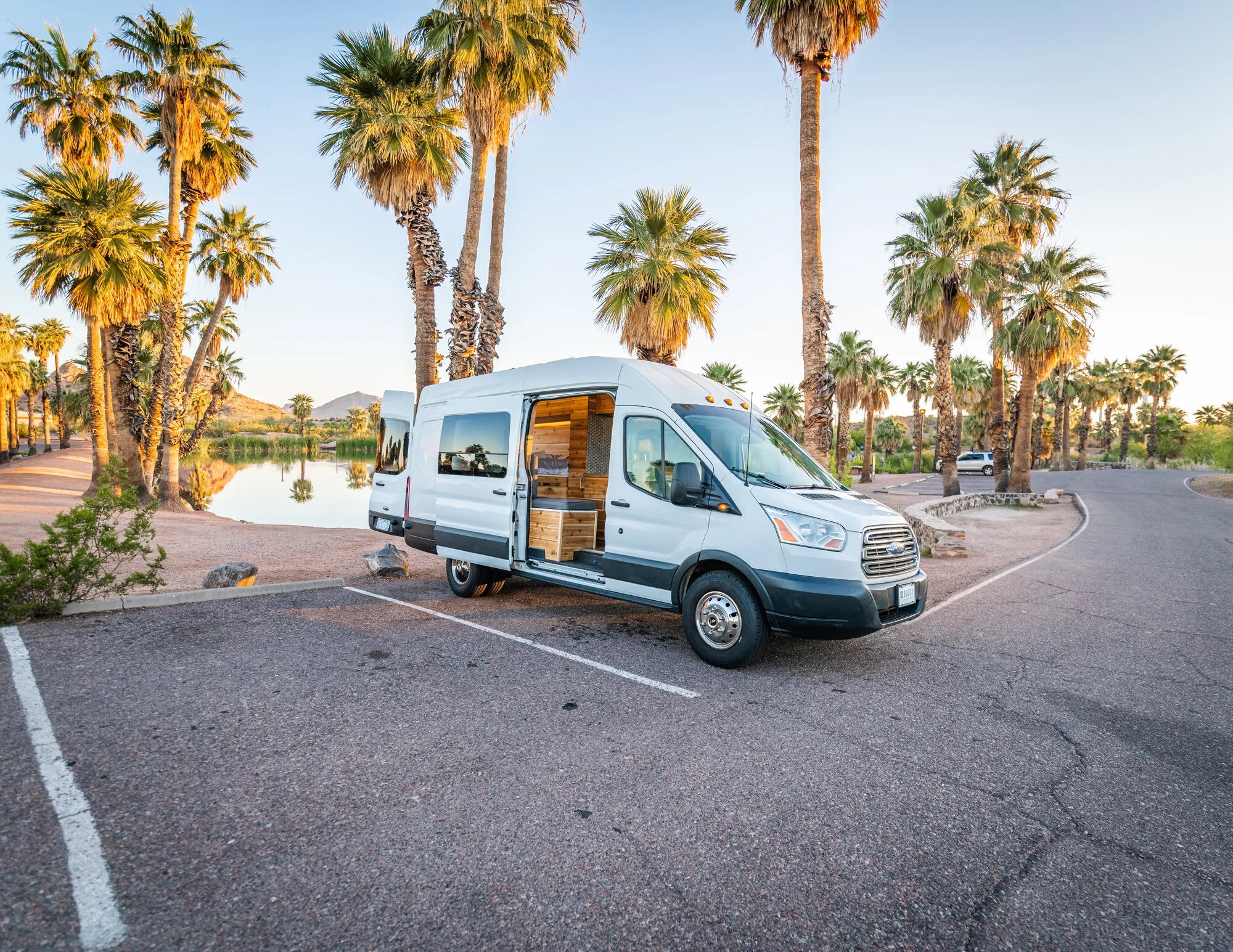
A driveway can hold two very different setups parked side by side on a Saturday morning. One rig is a single vehicle, fueled up and ready to pull away in minutes. The other is a truck-and-trailer combination, built to settle into one spot for a while.
Both of these qualify as RVs, even though only one looks like a traditional "recreational vehicle" at first glance. Camper vans are motorized RVs, while travel trailers are towable RVs that are pulled by a separate vehicle. The real tradeoff is mobility versus space: vans make it easier to move, while trailers free up your tow vehicle once parked.
What Camper Vans and Travel Trailers Are
Getting the terminology straight first makes the rest of this comparison much easier to follow.
Camper Vans
A camper van combines the engine, cab, and living space into one self-contained, motorized vehicle. Everything you need travels with the van itself, so there's no separate unit to hitch or unhitch.
Builders customize layouts, power systems, and finishes around how owners actually plan to travel. If you're exploring a camper van in Arizona, you'll find plenty of desert-tested conversions built for heat and off-grid stretches.
Travel Trailers
A travel trailer is a separate living unit towed behind a truck, SUV, or other capable vehicle. At camp, you can detach the trailer, freeing the tow vehicle for errands, sightseeing, or exploring nearby towns.
Because the trailer isn't also your engine and cab, interior layouts tend to offer more square footage. That extra space comes with a tradeoff, since you're now managing two separate vehicles instead of one.
Camper Van vs. Travel Trailer: Key Differences at a Glance
A head-on comparison makes these practical differences much easier to visualize quickly.
| Feature | Camper Van | Travel Trailer |
|---|---|---|
| Vehicle count | One, all-in-one | Two, trailer plus tow vehicle |
| Typical space | Compact, multipurpose | Roomier, separated zones |
| Setup at camp | Minimal, park and go | Hitching, leveling, stabilizing |
| Errands | Requires moving the entire rig | Unhitch and drive the tow vehicle freely. |
| Storage at home | One parking space needed | Trailer plus tow vehicle space |
| Maintenance | Chassis engine and conversion systems | Tow vehicle plus trailer tires, brakes, bearings, hitch, and living systems |
Neither option wins universally, since each one matches a different travel pattern and lifestyle. The right choice depends on how often you move, how many people travel with you, and how much space actually matters.
Motorized Camper Vans
A camper van is an all-in-one vehicle that keeps your footprint small on the road. Departures happen quickly, since there's no hitching process standing between you and the highway.
The tradeoff is that your living space moves every time you drive anywhere new. Running to a grocery store means packing up your entire home, not just grabbing your keys.
Towable Travel Trailers
Travel trailers separate the living space from the tow vehicle, giving you more layout options overall. Once parked, you can detach the trailer and explore the area using just your truck or SUV.
Setup takes longer, though, since you have to level, stabilize, and hook up utilities before you can relax. That extra step rewards travelers planning longer stays rather than quick overnight stops.
Cost of Owning a Camper Van or Travel Trailer
Comparing sticker prices alone misses most of what ownership actually costs over time.
Purchase and Vehicle Costs
A complete camper van bundles the conversion, chassis, and systems into a single upfront purchase price. A travel trailer’s price looks lower on its own, but you’ll also need a properly equipped tow vehicle.
If you already own a suitably rated tow vehicle, a trailer may require a smaller initial investment. If you need to buy a tow vehicle, remember to factor that cost into your comparison. Builders like Boho handle the full conversion, so you can also plan a camper van conversion around a specific budget and layout.
As an illustrative example, picture three ownership paths side by side: a trailer paired with a tow vehicle you already own, a trailer paired with a newly purchased tow vehicle, and a camper van combining chassis and conversion in one purchase.
With comparable equipment and storage capacity across all three, the already-owned tow vehicle path typically requires the smallest upfront investment. The newly purchased tow vehicle path often lands closest to a comparably equipped camper van build.
Exact figures depend on current chassis pricing, conversion specs, and your specific equipment choices. Always confirm live quotes with Boho before comparing real numbers for your build.
Fuel and Maintenance
One integrated vehicle burns fuel differently than two separate units moving together down the highway. Fuel economy depends heavily on weight, drivetrain, speed, and terrain, regardless of which setup you choose.
Camper vans generally handle fuel better because they’re lighter and more aerodynamic than a loaded trailer combination. A trailer has no engine but adds tires, wheel bearings, brakes, hitch equipment, and living systems to maintain alongside the tow vehicle. Compare that combined upkeep with the camper van’s chassis and conversion systems.
Storage and Resale
Insurance, registration, and storage costs apply differently depending on whether you own one vehicle or two. A travel trailer often needs off-site storage, while a camper van usually fits in a standard driveway.
Depreciation varies by brand and condition, though a well-maintained tow vehicle often retains value better than expected. Shopping for our used travel van avoids much of that initial depreciation hit, since someone else already absorbed it.
Letting your tow vehicle handle daily driving between trips can further offset total ownership costs.
Driving, Towing, and Campsite Setup
Ordinary driving looks nothing like hitching, backing, and leveling a loaded trailer.
Road Handling and Towing
A vehicle’s advertised tow rating tells only part of the story for safe, legal towing. Payload, tongue weight, GVWR, and GCWR determine whether you can safely tow a specific trailer.
According to the Virginia DWR, tongue weight should fall within roughly 7% to 12% of the trailer’s total loaded weight. The brochure notes that improper tongue weight “can cause suspension and drivetrain damage,” underscoring why this percentage alone doesn’t establish towing suitability.
Owner’s manual requirements, loaded weights, axle ratings, hitch ratings, and payload all apply alongside tongue weight when determining towing suitability. Always verify every one of these figures against your specific vehicle and trailer owner’s manuals before towing.
Camp Setup and Errands
A camper van avoids trailer hitching and can require less setup, although leveling may still be needed for comfortable sleeping. Travel trailers take longer to set up, requiring leveling blocks, stabilizers, and utility hookups before you can settle in.
That extra setup pays off once you’re ready to explore, since unhitching frees your tow vehicle completely. Sightseeing or grocery runs become simple errands rather than a full packing-and-driving process.
Space, Comfort, and RV Systems
Comfort expectations shift dramatically depending on party size, trip length, and how much time you'll spend indoors.
Living and Sleeping Space
Travel trailers generally offer more floor plan variety, with separate zones for sleeping, cooking, and lounging. Camper vans prioritize compact, multipurpose spaces, with a dinette that often converts into a bed at night.
Larger groups and longer stays tend to favor a trailer’s extra separation and dedicated living areas. A well-planned van layout can support short or extended trips; seating, sleeping arrangements, storage, and daily routines determine suitability.
Utilities and Cargo
Water capacity, battery systems, propane, and climate control vary widely by model and build. Camper vans typically carry smaller tanks and rely more heavily on solar and lithium power setups.
Travel trailers can often support larger tanks and more propane capacity, though amounts vary significantly by model. Both options have cargo weight limits, so always check the specifications before loading up gear.
Travel Freedom and Camping Style
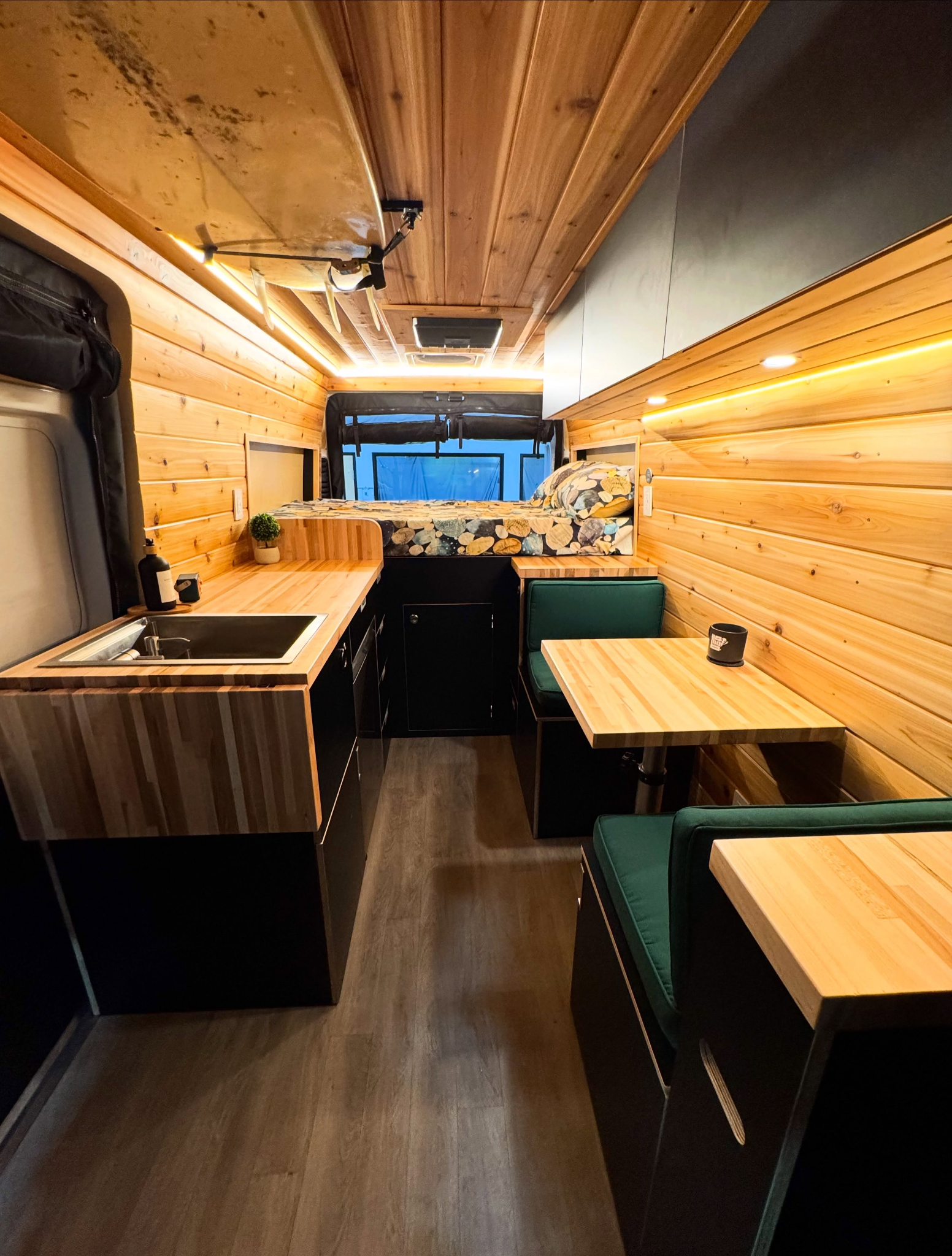
Depending on your preferred camping style, “Freedom” can have two different meanings.
Mobile Touring
Camper vans suit road trips built around frequent location changes and quick, minimal arrival routines. Urban transitions feel seamless too, since there's no trailer to navigate through city traffic or tight parking. This mobile style rewards travelers who want to plan a camping trip packed with multiple destinations into one route.
Basecamp Travel
Travel trailers suit longer campsite stays, where you settle in once and explore the surrounding area locally. Families or larger groups especially benefit from a detachable tow vehicle for daily local trips. This basecamp approach rewards travelers who prefer staying put rather than constantly changing locations.
How to Choose Between a Camper Van and Travel Trailer
Making this decision well starts with your actual habits, not an idealized version of van life.
Trip Profile
Start by evaluating trip length, how often you change destinations, and how many travelers are coming along. Pets, remote work needs, and campground preferences all shape which setup fits your situation better.
Comfort expectations matter too, since some travelers genuinely need more indoor space than others.
Decision Checklist
Before deciding, ask whether you already own a suitable tow vehicle with proper payload and towing capacity. Consider whether you have parking and storage space for a trailer or if a van is better for you.
Think honestly about whether you're comfortable backing up and maneuvering a trailer regularly. If you're still unsure, rent either option first to cut the guesswork before committing.
Your Ride, Your Rules on the Road
Whether you choose a camper van or a travel trailer depends on how you want your trips to feel, not on which option sounds more adventurous. Vans reward spontaneity, while trailers reward settling in.
At Boho Camper Vans, you can rent a real conversion before you decide anything and test van life firsthand on Arizona roads. Ready to see which fits? Book your trip and find out for yourself.
Frequently Asked Questions
-
It depends on the total system cost, not just the trailer's sticker price. A trailer may cost less upfront but often requires you to buy or upgrade a tow vehicle.
-
Not always, since some SUVs can tow smaller trailers within their rated limits. Suitability depends on payload, towing capacity, hitch equipment, and the loaded trailer's actual total weight.
-
Camper vans offer a smaller footprint, but remote-road suitability depends on clearance, traction, loaded weight, road conditions, and any rental restrictions. Trailers can carry more water and power, plus a detachable tow vehicle for scouting routes.
-
For some owners, yes, especially compact conversions built on a standard van chassis. For others, height, parking limits, fuel use, and the hassle of breaking the camp daily limit practicality.