
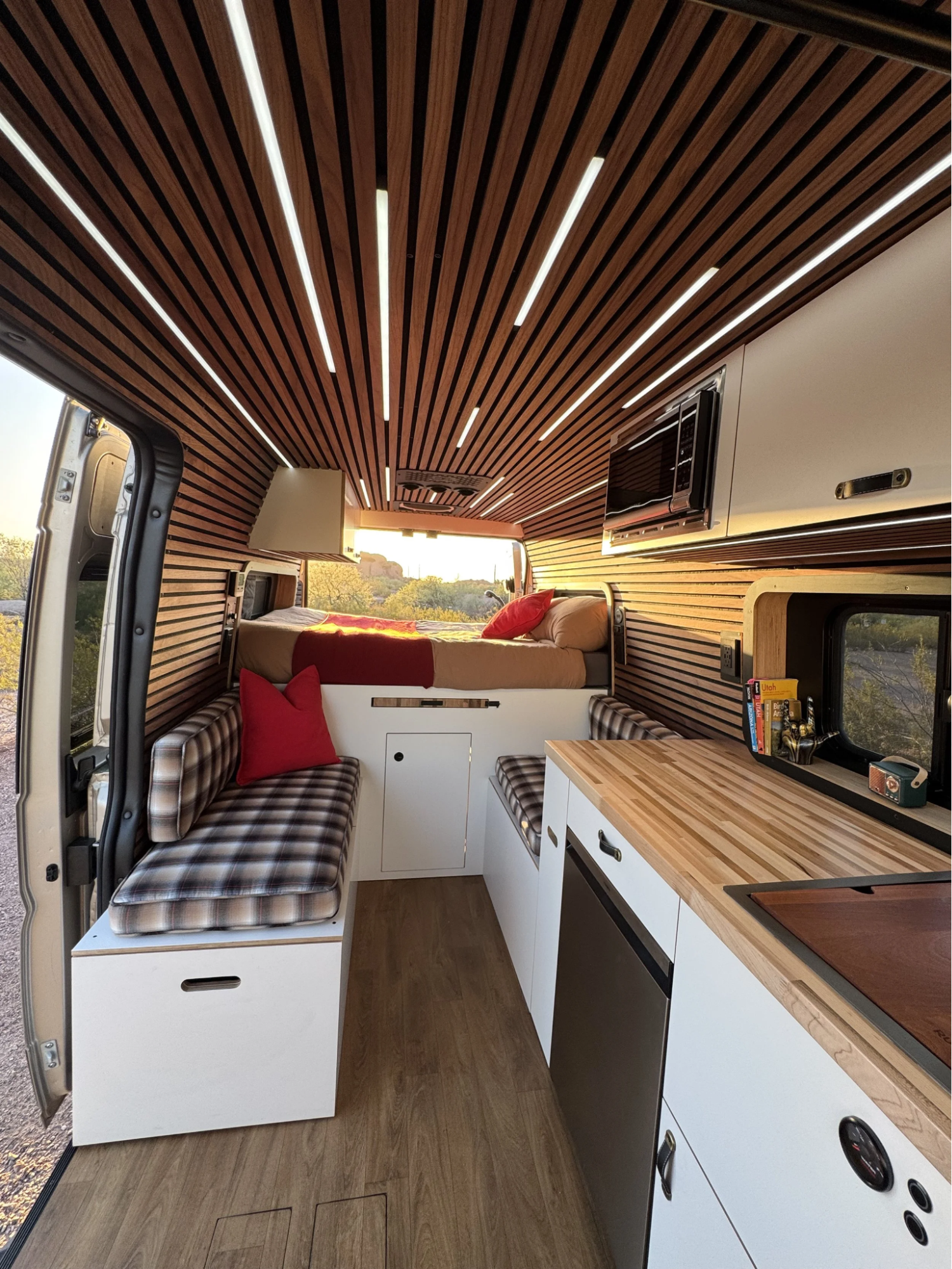
A camper van is a type of RV built entirely on one motorized chassis rather than towed behind a separate vehicle. This guide compares van-based campers with larger Class A and Class C motorhomes across size, cost, driving experience, and campsite access.
Two travelers eyeing the same open highway can still want two very different setups underneath them. One wants to park wherever a scenic overlook appears, slipping into a compact rig built for quick getaways. The other wants a spacious home on wheels, complete with a full kitchen and a private bathroom.
Both travelers are picturing real vehicles, just built around very different priorities and travel habits. Choosing between them involves weighing trade-offs in mobility, space, and how often you plan to move.
This guide sticks to the broad overview between camper vans and RVs as vehicle categories. For a closer breakdown of Class B versus Class C motorhomes specifically, see our Class B vs. Class C comparison.
What Camper Vans and RVs Are
Before comparing features side by side, it helps to define each vehicle type clearly first.
Camper Vans
A camper van is a van-based recreational vehicle, often classified by manufacturers as a Class B motorhome. Converted vans vary widely, though, since equipment, legal classification, and build quality depend entirely on who performed the conversion.
Boho handles the full conversion build and can help you select or source the right chassis for your project. Chassis cost and conversion cost are tracked separately, since Boho builds out vans rather than manufacturing or selling new chassis directly. Understanding what a camper van is clarifies how it differs from a larger motorhome.
RV
This article uses "RV" specifically to describe larger Class A and Class C motorhomes built for extended living. Travel trailers are towable RVs, while truck campers are carried in a pickup truck bed. Both belong to the broader RV category.
Class A models ride on commercial bus or truck chassis, while Class C units use a cutaway van cab section. Both classes typically include full bathrooms, larger kitchens, and considerably more living space than a camper van.
Camper Van vs. RV: Key Differences
Once you settle the terminology, the real differences between these vehicle types become much easier to see. The table below compares footprint, sleeping capacity, bathrooms, storage, and typical utility setups.
| Feature | Camper Van | RV (Class A/C) |
| Footprint | 17 to 24 ft, narrow | 25 to 40+ ft, wide |
| Sleeping capacity | 1 to 5 people | 5 to 8+ people |
| Bathroom | Wet bath or none | Full bathroom standard |
| Storage | Compact, built-in | Extensive exterior bays |
| Setup time | Minimal, park and go | Leveling, hookups, slide-outs |
Size and Mobility
Camper vans generally have a smaller footprint than larger motorhomes, but parking-space fit depends on vehicle length, overhang, and local restrictions. Measure the finished vehicle’s height, including roof equipment, and check clearance limits before entering garages or covered areas.
Larger RVs require wider lanes, more planning around low bridges, and often a separate tow vehicle for errands. Route planning becomes noticeably more complex once vehicle length exceeds twenty-five feet.
Space and Amenities
RVs typically include separate sleeping areas, a dedicated bathroom, and enough floor space to move around comfortably. Camper vans trade that extra square footage for a vehicle that still fits in a regular driveway.
Camper van kitchens are compact but functional, usually built around a two-burner stove and a small fridge. Privacy depends on layout, since many van conversions use curtains instead of solid interior walls.
Utilities and Setup
Water capacity, waste tanks, and electrical systems vary enormously depending on the specific model and conversion quality. Larger RVs often include generators, full hookups, and automatic leveling systems that extend setup time considerably.
Campervans usually rely on smaller water tanks, solar panels, and lithium batteries built for shorter stays between fill-ups. Setup time stays minimal since most conversions skip slide-outs and leveling jacks entirely.
Costs of Camper Vans and RVs
Vehicle type aside, cost remains one of the biggest factors in this entire decision.
Purchase and Rental Costs
Vehicle age, conversion quality, season, and included equipment all significantly affect camper van and RV pricing. Purchase prices overlap substantially. Compare vehicles of similar age, condition, equipment, and build quality rather than assuming one category costs less.
Rental rates follow similar patterns, with camper vans usually costing less per night than larger motorhomes during peak season. Mileage allowances and included equipment can shift that comparison considerably depending on the rental company.
Ongoing Travel Costs
Fuel economy favors camper vans significantly, since smaller engines and lighter weight reduce consumption on long highway stretches. Larger RVs incur higher insurance, maintenance, and storage costs when not actively used for travel.
Campground fees often run higher for RVs too, since many sites charge based on vehicle length and hookup type. Maintenance costs rise with vehicle complexity, and RVs carry considerably more systems than a typical camper van.
Driving, Parking, and Campsite Access
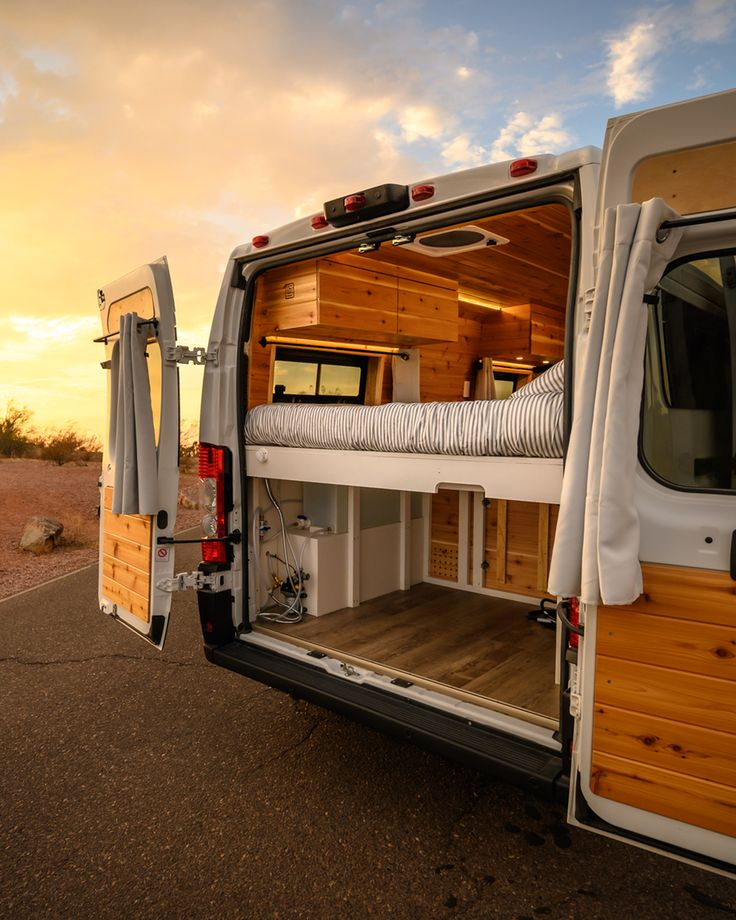
Cost matters, but daily driving experience shapes how much you actually enjoy a trip.
Road Handling and Parking
Visibility and highway handling stay close to a regular van when driving a camper conversion. When reversing, check blind spots and overhead clearance; use available cameras and a spotter when needed.
Larger RVs demand more attention in city traffic, tight turns, and anywhere clearance becomes genuinely uncertain. Many RV owners end up towing a smaller secondary vehicle just to run everyday errands comfortably.
Campsites and Boondocking
Length limits and hookup availability vary by campground, which directly affects which vehicle type fits. Smaller camper vans access tighter sites and rougher dispersed camping areas far more easily than larger rigs.
According to the Bureau of Land Management, dispersed camping is generally allowed for free, though stay limits and permitted areas vary by state and field office. Many locations cap dispersed stays at fourteen days within any 28-day period, but confirm current limits with your destination’s local BLM office first.
As the agency notes, “dispersed camping is for short-term recreation, not long-term living,” a useful distinction for trip planning.
Comfort and Practicality by Travel Style
Vehicle choice ultimately depends on who is traveling and exactly how they plan to travel.
Solo and Couple Travel
Camper vans can support quick getaways and extended travel. Compare sleeping dimensions, seating, storage, bathroom preferences, and daily routines to determine which layout provides the comfort you need.
Families, Pets, and Gear
Families traveling with children or pets usually need more legal seating and sleeping capacity overall. Larger RVs provide dedicated space for gear storage, pet routines, and children's everyday schedules.
A camper van can also suit family travel when its approved travel seating, sleeping arrangements, and storage meet the group’s needs.
Trip Length and Pace
Fast-moving road trips favor camper vans because quick setup makes frequent destination changes easy. For slow travel, seasonal stays, and remote work, compare usable workspace, power, storage, and living arrangements in each vehicle. Full-time travelers in varied climates often choose the vehicle that best matches their daily routine.
How to Choose Between a Camper Van and an RV
After considering all factors, the decision usually comes down to a few key priorities.
Choose a Camper Van
Camper vans suit smaller groups, frequent destination changes, and travelers comfortable with compact facilities overall. Urban stops and lighter packing styles both favor a nimble, van-based travel setup.
If you're still deciding, renting lets you test cooking, sleeping, and parking before committing to a purchase. You can book a camper van directly through Boho to try real van life firsthand.
Choose a Larger RV
Families and travelers wanting indoor living space often prefer a larger RV. Bigger tanks and far more residential amenities support extended stays without constant resupply trips.
The smallest vehicle that comfortably supports your actual travel habits is usually the right choice overall. Renting both types first removes most of the guesswork before you make a major purchase.
Your Next Road Trip Starts With the Right Rig
Choosing between a camper van and an RV depends on how you want to travel, not which vehicle looks more impressive. Smaller groups chasing spontaneous stops often love van life, while families craving space often choose a larger motorhome.
At Boho Camper Vans, renting a camper van lets you test van travel before considering a purchase. Ready to see which lifestyle actually fits your travel style? Book your trip and discover what works for you on the road.
Frequently Asked Questions
-
Yes, camper vans generally fall within the broader recreational vehicle category used across the United States. Classification and registration terminology can still vary somewhat by state.
-
Camper vans often cost less to operate day to day, though purchase prices can still run high. Compact engineering and premium conversion work can quickly drive up upfront costs.
-
Some camper van conversions include a permanent wet bath with both a toilet and shower. Others use portable toilets or outdoor showers, and some skip bathroom facilities entirely.
-
Either can support full-time travel. Compare the specific floor plan, storage, workspace, water and power systems, and your preferred balance of living space and mobility.
-
Easier parking doesn't override posted restrictions or private property rules in most areas. Campground policies and local overnight parking laws still apply regardless of your vehicle's smaller size.